Dinacon 2025
Dinacon
I arrived at the Dinacon conference in July 2025 following a year packed with BrailleRAP events. This included the development of DesktopBrailleRAP, the creation of the BrailleRAP XL to fully leverage graphic embossing capabilities, and a series of workshops in the Democratic Republic of the Congo, Belgium, and France. The year 2025 also saw BrailleRAP units being built around the world: five in Cameroon, five in Germany (Hamburg and Chemnitz), two in the United States, two in the Philippines, one in Egypt, one in China, one in Argentina...
The Dinacon conference is organized by Digital Naturalism Laboratories. Upon arrival, what immediately stands out is the enthusiasm surrounding three key themes: making, collaborating, and sharing knowledge. Participants include artists, engineers, and researchers from all over the globe, brought together by a shared passion for open source and diverse artistic practices. Our host organization, the "Sea Communities" association, fosters responsible tourism in the Les region of northern Bali. This development is driven by research programs focused on coral reef and environmental conservation, as well as sustainable development initiatives.
To top it all off, the setting is idyllic: northern Bali, just 20 meters from the ocean and far removed from the usual tourist trails. Attending an event is always a great opportunity to meet people and exchange viewpoints and experiences.
BrailleRAP Workshop
As planned, I led a two days BrailleRAP assembly workshop. The session was designed for members of the "Sea Communities" association who were interested in assembling a digitally controlled machine. Naturally, the workshop is an opportunity to discuss the machine's purpose, producing Braille documents, and to take stock of the state of inclusion in Indonesia. What’s new about this BrailleRAP is that all the parts were made using PETG. Traditionally, I tend to make kits using ABS, simply because PLA reacts very poorly to UV light or temperatures approaching 50°C temperatures easily reached in tropical environments, such as in direct sunlight behind a window or inside a car. PETG doesn't completely solve the UV issue, especially in Bali, but neither does ABS, and the BrailleRAP isn't designed for outdoor use.
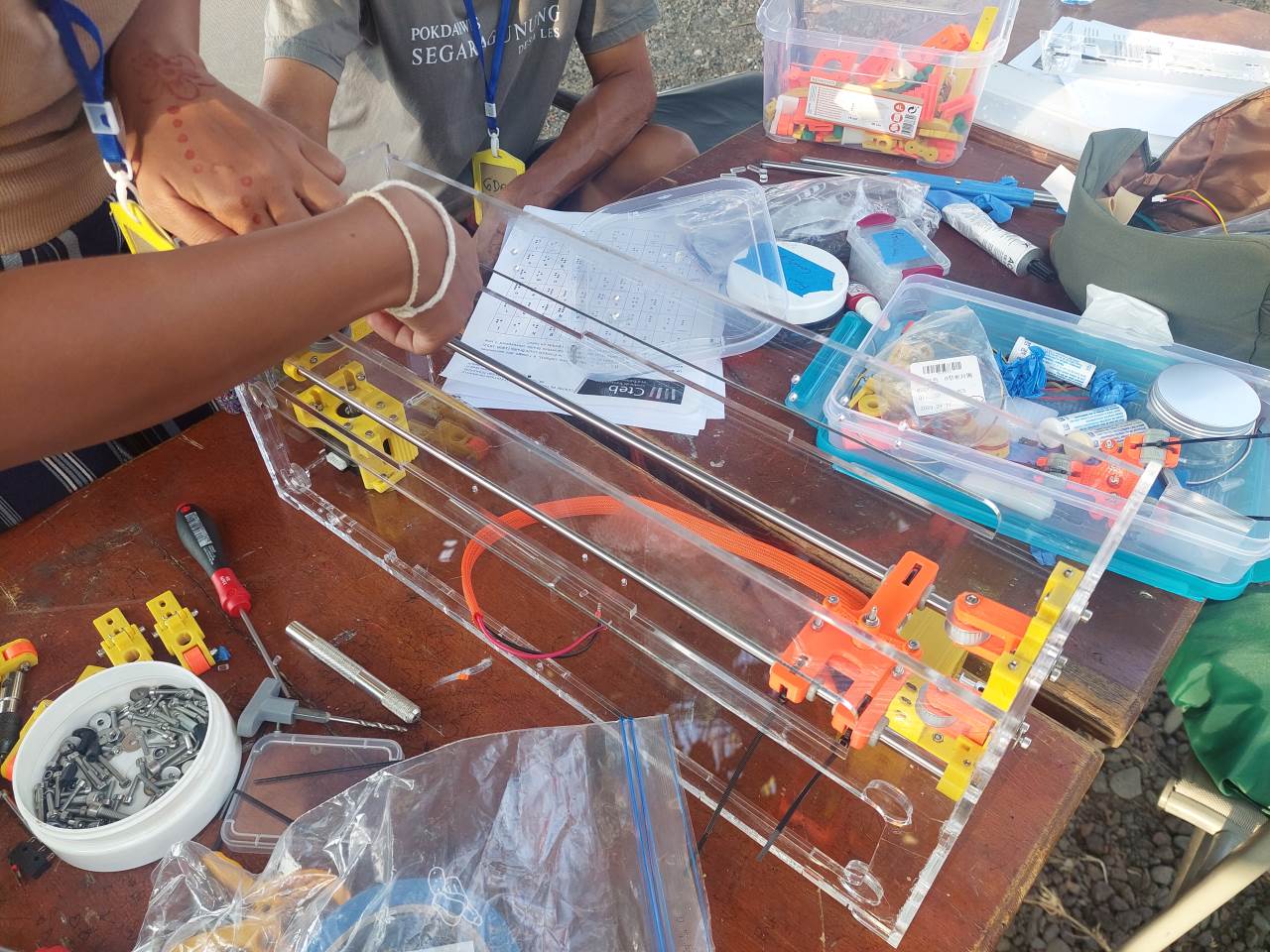
You might say, "Why not just print the parts in PETG?" Well, in a sense, that’s true. But when you claim to provide solutions to improve accessibility, the very least you can do is ensure the machine works properly. For a BrailleRAP, producing quality Braille with a machine that reliably detects paper is the bare minimum. So, I like to validate experiments before including them in the documentation. And I have to say, PETG has been a real success, it is much easier to print with. Plus, the parts are more precise, even on my Creality CR10, which is starting to show its age. More precise parts mean fewer adjustments and easier assembly. The PETG filaments used were eSun’s Solid Gold and Rosa3D’s Juicy Orange.
Once the BrailleRAP XL was assembled and calibrated, we began producing documents—starting with A4 size. Since I managed to get hold of 180g paper in a size close to A3 in the village, we created various graphics: a village map, a sea turtle, the Eiffel Tower...
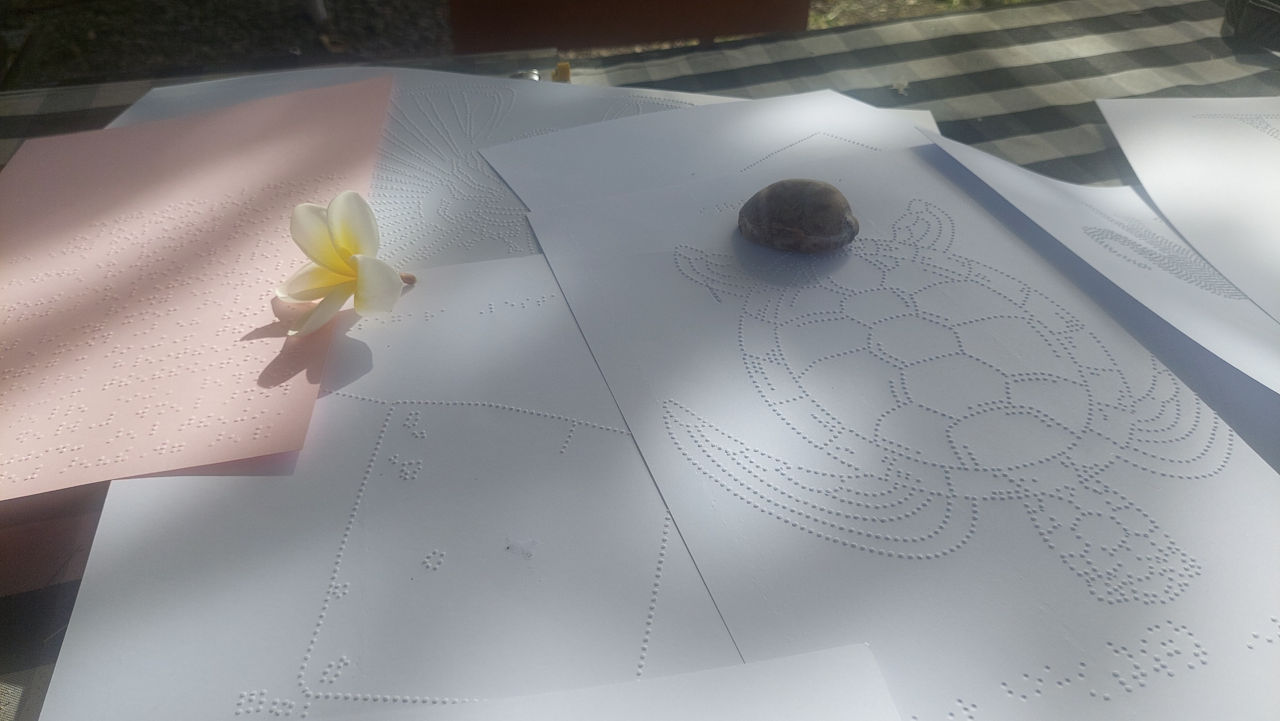
Braille on banana leaves
Naturally, after a few demonstrations, I ended up cutting open a soda can and producing Braille on the resulting sheet of metal. That marked the start of a series of experiments involving Braille production on various materials.
- Saad proposed a workshop to test open source tools for cutting cans more cleanly.
- Marrianah wanted to depict a world map centered on the Pacific Ocean using a natural material. The general idea was to represent the connection between Colombia and Bali.
- Lee wanted to emboss a series of fish descriptions in Braille. These descriptions came from an experiment designed to visualize divers' indirect observations.
Cutting cans
I have been cutting cans for a few years now to obtain aluminum sheets that we then work with the BrailleRAP. With a utility knife, a pair of scissors, or a good knife, you can get a 0.1 mm thick aluminum sheet in just a few minutes. You simply need to flatten it out and feed it into the BrailleRAP. However, the flattening stage is where this method shows its limitations. When cut directly with a utility knife or scissors, the edges are very uneven and maybe sharp enough to hurt a finger. Of course, you can refine the edges by trimming the sheet after flattening it, but this significantly reduces the usable surface area. Another downside is that aluminum is tougher than paper, so tools not designed for cutting metal get dull quickly.
Following a suggestion from Saad, we headed into the village to pick up a few essential items needed to test some tools Saad had found online: utility knife blades, tin snips...
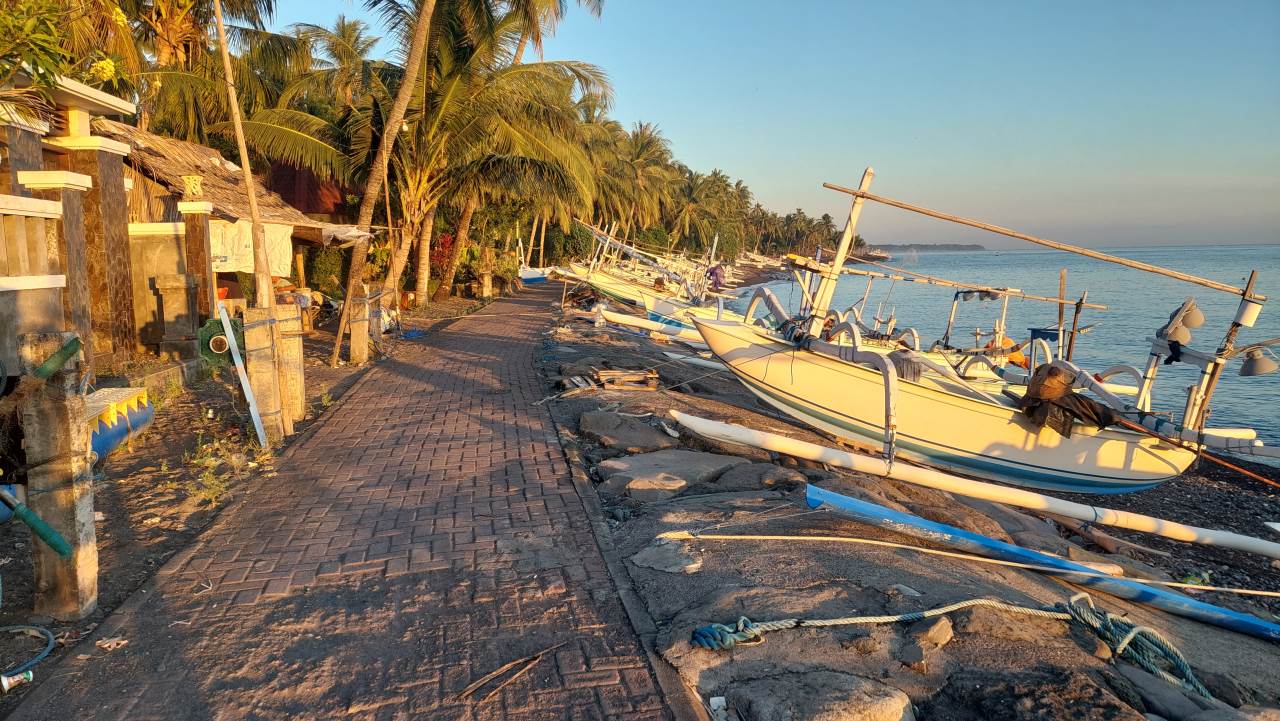
After our shopping trip to the village, Saad printed the parts on the available 3D printer, and we began testing the various projects we had found online.
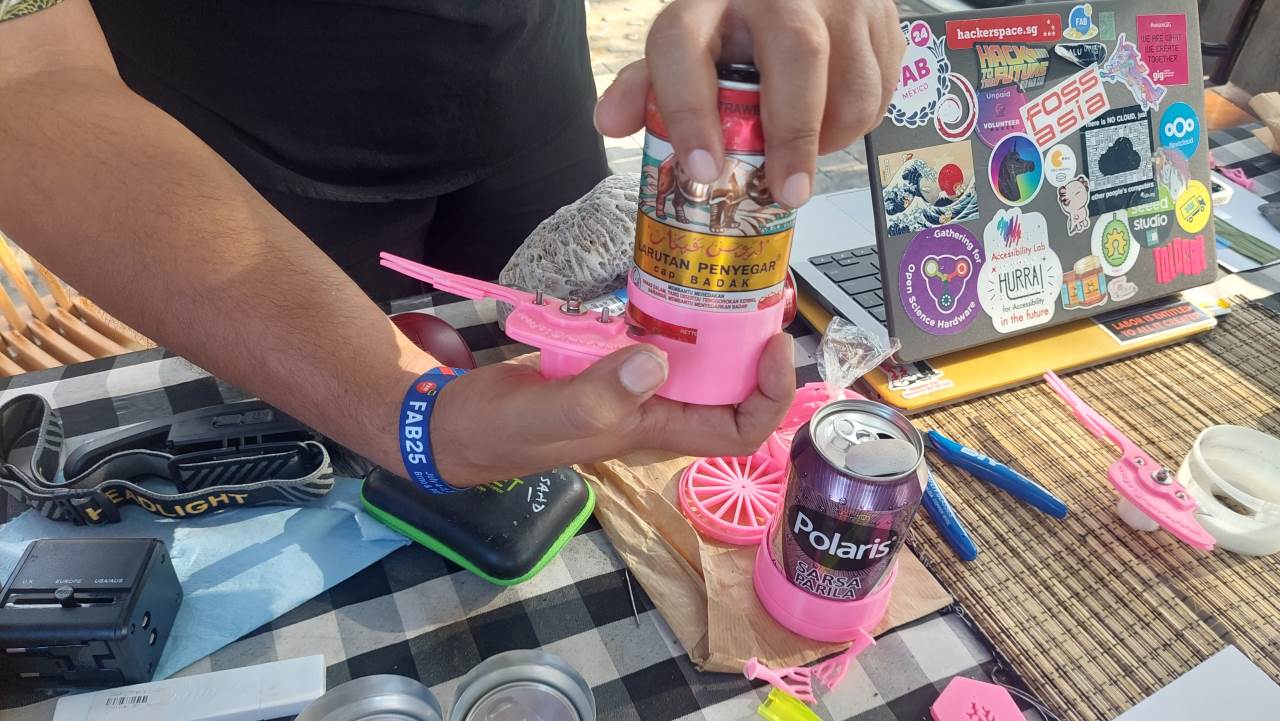
After a few trials, this model caught our eye. Provided you take your time and rotate the can through the tool several times, you get clean cuts and a much safer process than using improvised tools. 
Embossing banana leaves
Alongside various experiments with cutting cans, Marrianah became interested in the BrailleRAP and began planning an art installation to symbolize the connection between Colombia—her home country—and Bali, the location of the Dinacon conference. The conference included an "Open Day" on Sunday, where all Dinacon participants showcased the week's projects to visitors from local schools and associations. We initially tried using A3 paper. While this allowed Marrianah to generate a satisfactory map and learn how to use the BrailleRAP software, she wanted something different. Specifically a larger format, and she suggested using a banana leaf. We certainly had no shortage of banana leaf sizes to choose from. The challenge with banana leaves is that they are much more pliable than paper, making it difficult for the drive rollers to work appropriately. The paper detection sensor faced similar issues. To test the concept, we used masking tape to attach the banana leaf to one or more sheets of paper. The result was quite impressive: the paper provided enough rigidity for the BrailleRAP to operate properly, and the machine was powerful enough to emboss through both layers.

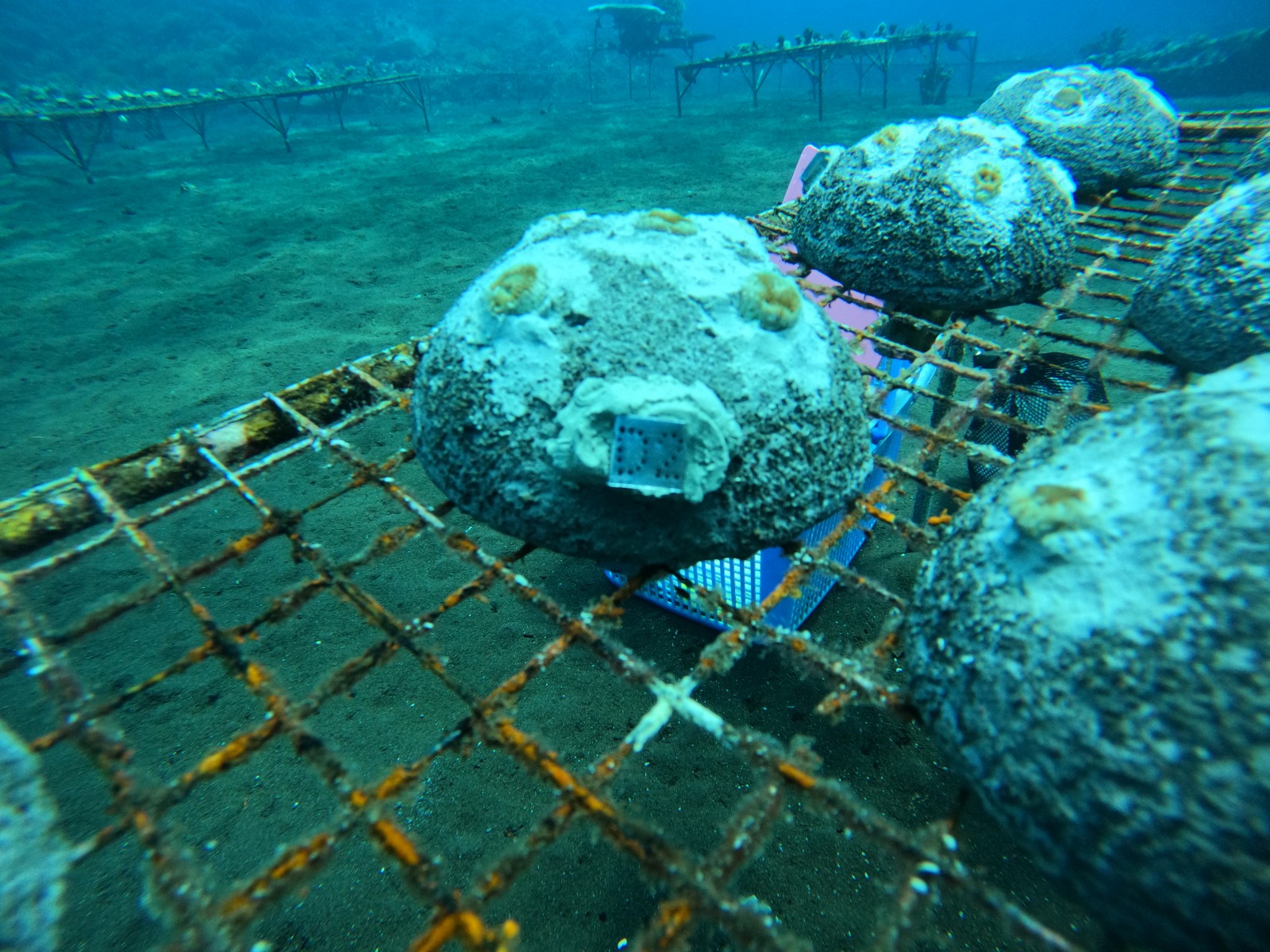
Ultimately, the value of this type of experiment lies in the method itself: attaching a flexible material to a substrate that the BrailleRAP handles well significantly expands the range of possible creations. The same method, documented here, subsequently allowed us to produce a series of aluminum sheets embossed in Braille with the descriptions Lee requested. The can cutting tool also made the task of obtaining aluminum sheets easier. Beyond accessibility, the aluminum sheet embossing technique also enabled the "Sea Communities" association to create tags for marking reef restoration experiments.
Another language
Naturally, a trip to Indonesia is the perfect opportunity to translate software into local languages. Bahasa (the Indonesian word for "language") is now available as a language option in the AccessBrailleRAP and DesktopBrailleRAP interfaces. While English is widely spoken in Indonesia, using software in it's own language is often more comfortable and wonderful symbol of sharing for an open source project.
Open Source Hardware certification
Saad had suggested Open Hardware certification to me some time before Dinacon. I had put it off, caught up in organizing the logistics for the workshop carried out in April and May. Naturally, meeting at Dinacon, and being able to discuss it with Lee and Sid from OSHWA, really boosted the motivation to pursue certification. After a few final checks, I filled out the certification application form from the terrace of the restaurant where we were having our meals together. A few days later, I received an email confirming the good news: the BrailleRAP project was now Open Hardware certified. It was a great opportunity to celebrate the occasion with Andy, Saad, and William aka MOTHBOX PA000003 and Contactless Bicycle Dynamo and Light US002771.